

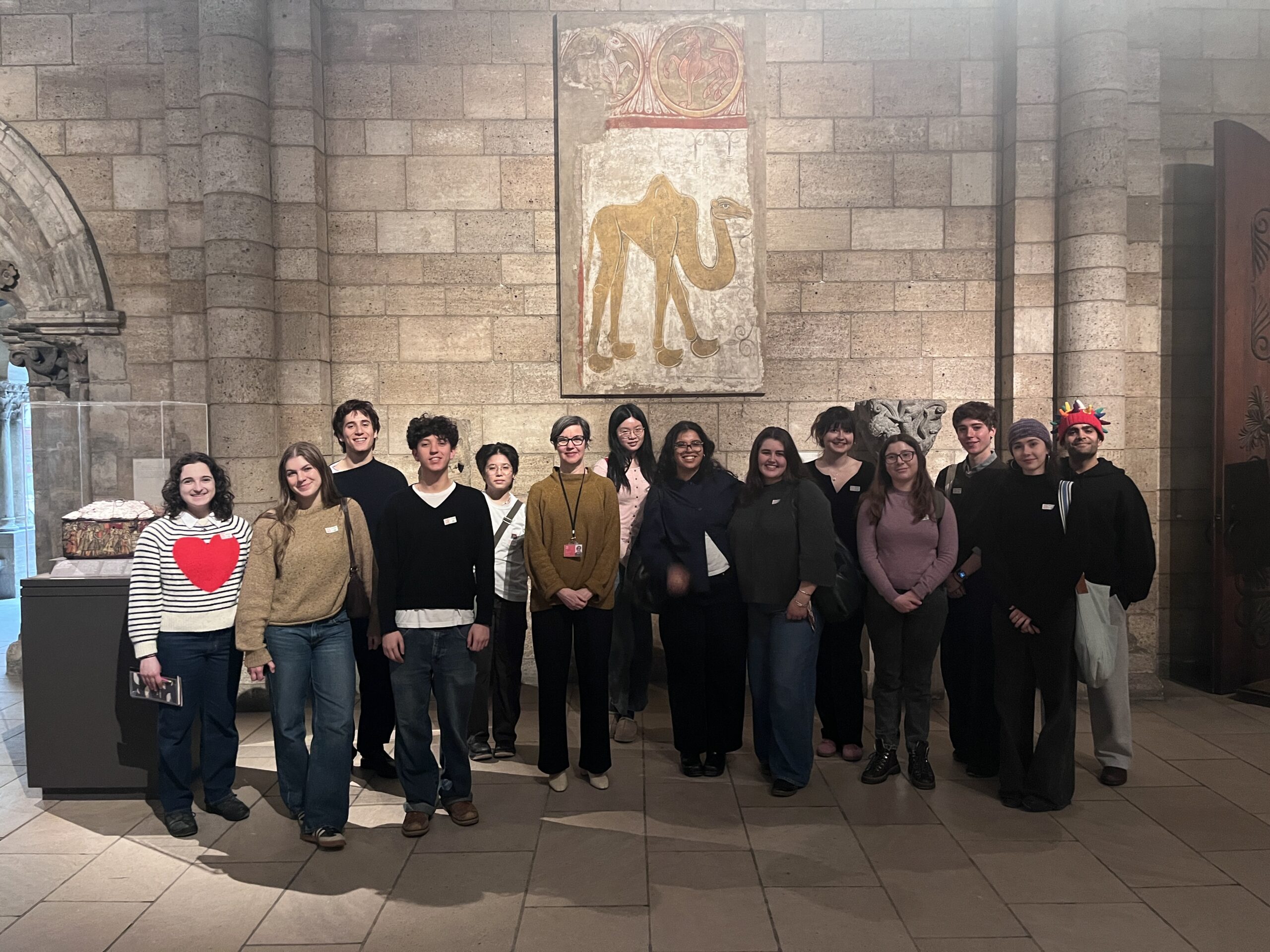
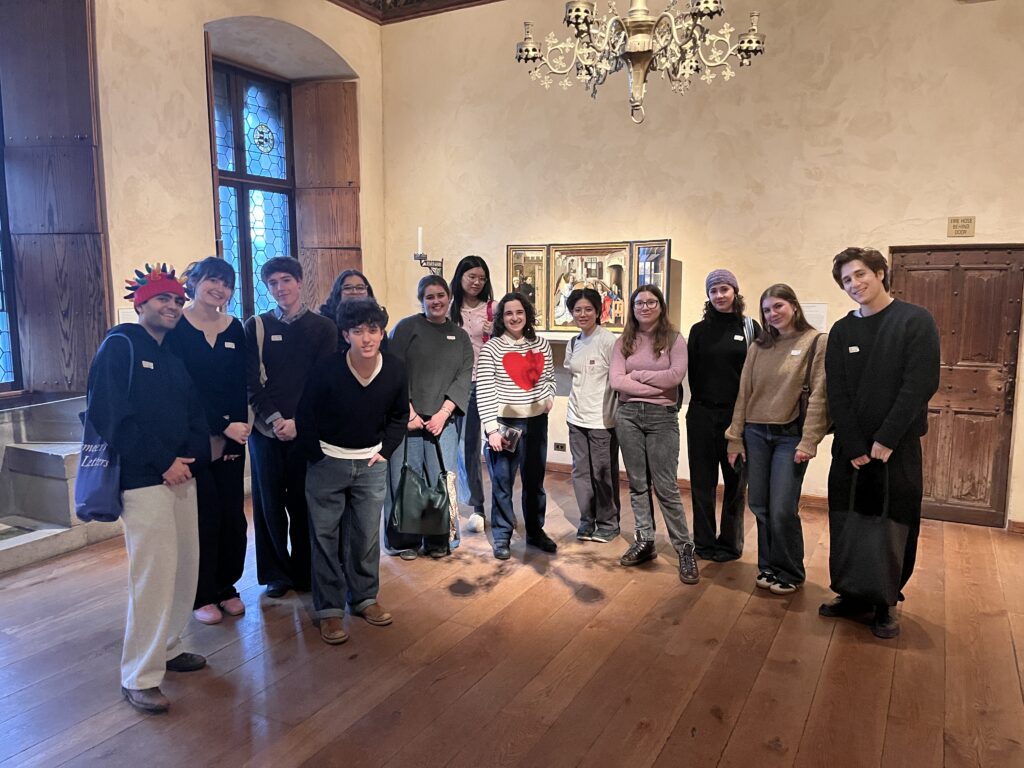
Featured image: The students of ARHA 311: The Body in Medieval Art with Melanie Holcomb (sixth from left) in front of a twelfth-century Spanish fresco of a camel.
Written by Nell Brayton ’27
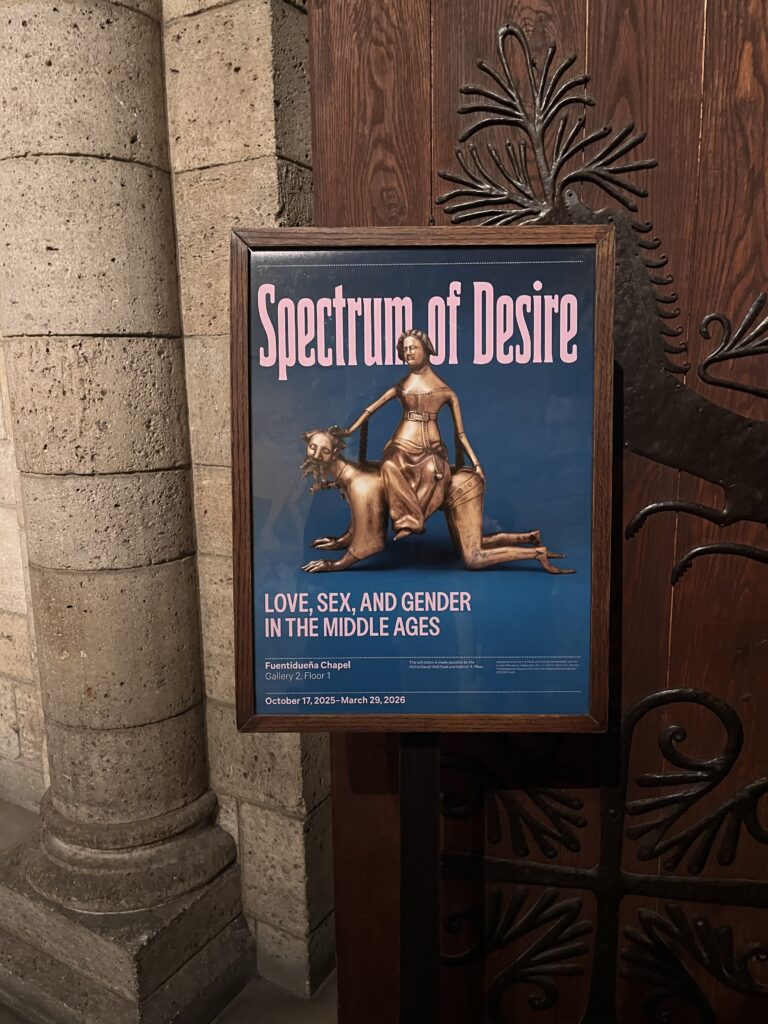
On Friday, February 20, our class, a seminar on The Body in Medieval Art (ARHA 311) taught by Professor Joseph Ackley, journeyed to The Met Cloisters to view the special exhibition Spectrum of Desire: Love, Sex, and Gender in the Middle Ages. We began with a guided tour of the exhibition by Melanie Holcomb, Curator in the Department of Medieval Art and The Cloisters and co-curator of Spectrum of Desire. A large, sweeping teal curtain separated the exhibition gallery from the rest of the museum, evoking a boudoir or a confessional booth and cleverly setting the stage for the interplay of courtly and religious love that dances through the exhibition space. We passed under the curtain, and Holcomb ushered us to the Riddles of the Queen of Sheba, a vibrant, well-preserved tapestry. This work was an excellent entry point into the exhibition, as the tapestry helped illustrate how medieval conceptions of sex and gender were perhaps less fixed than those of today.
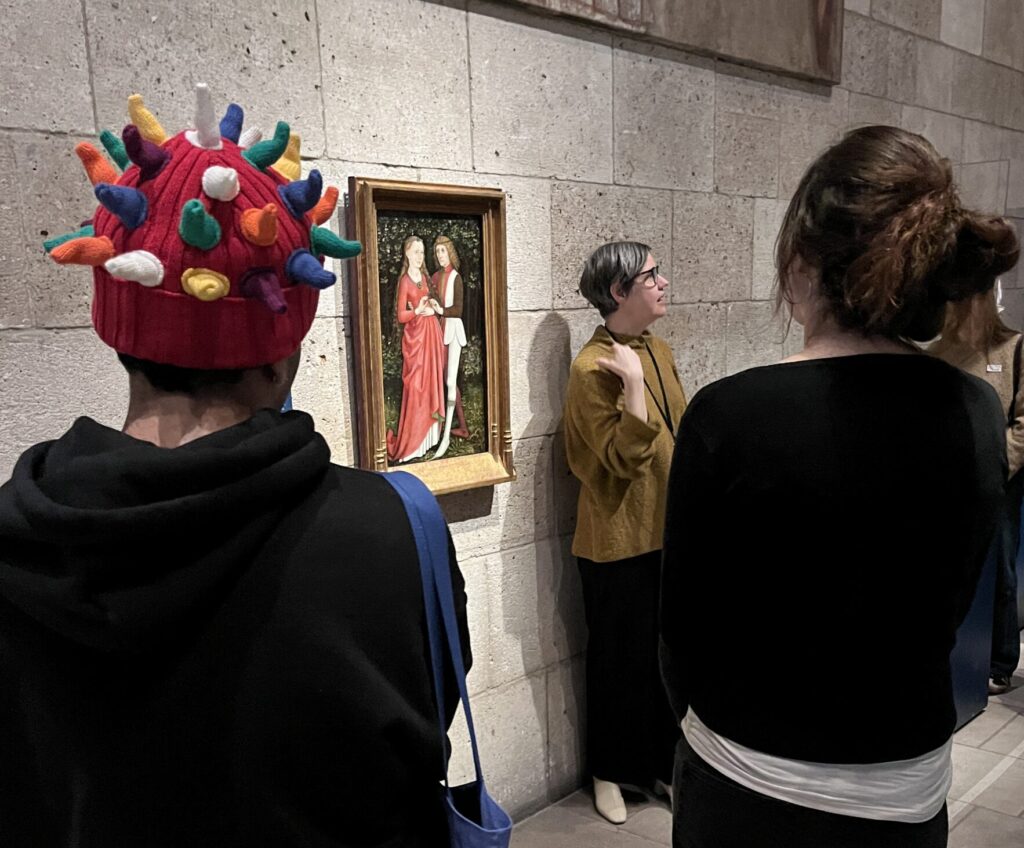
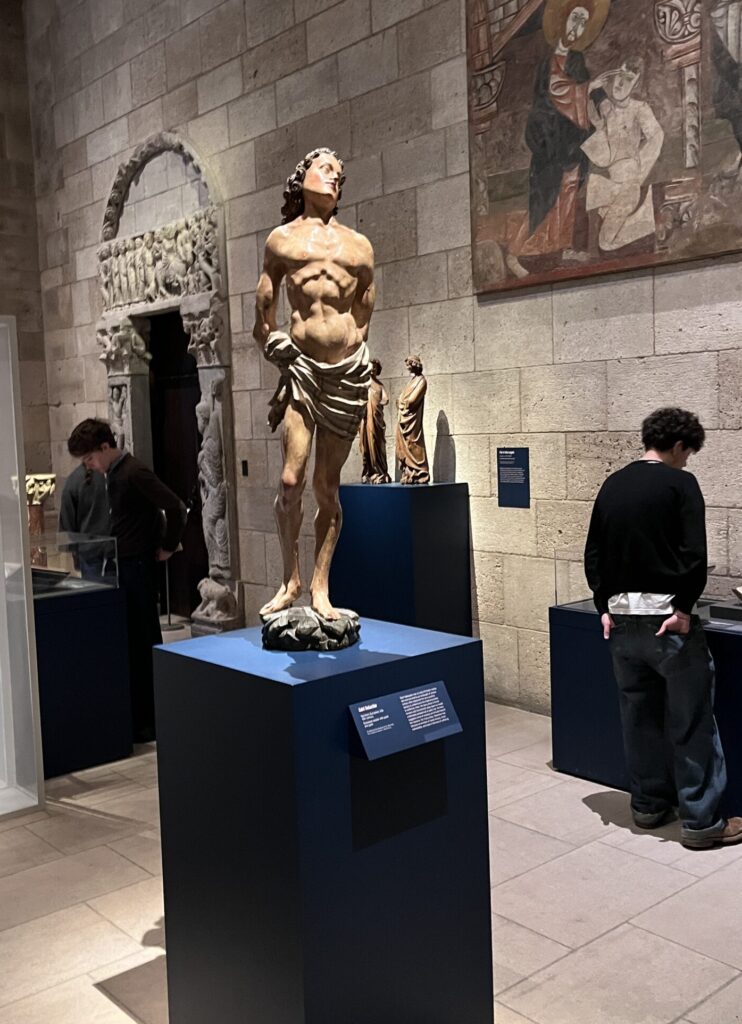
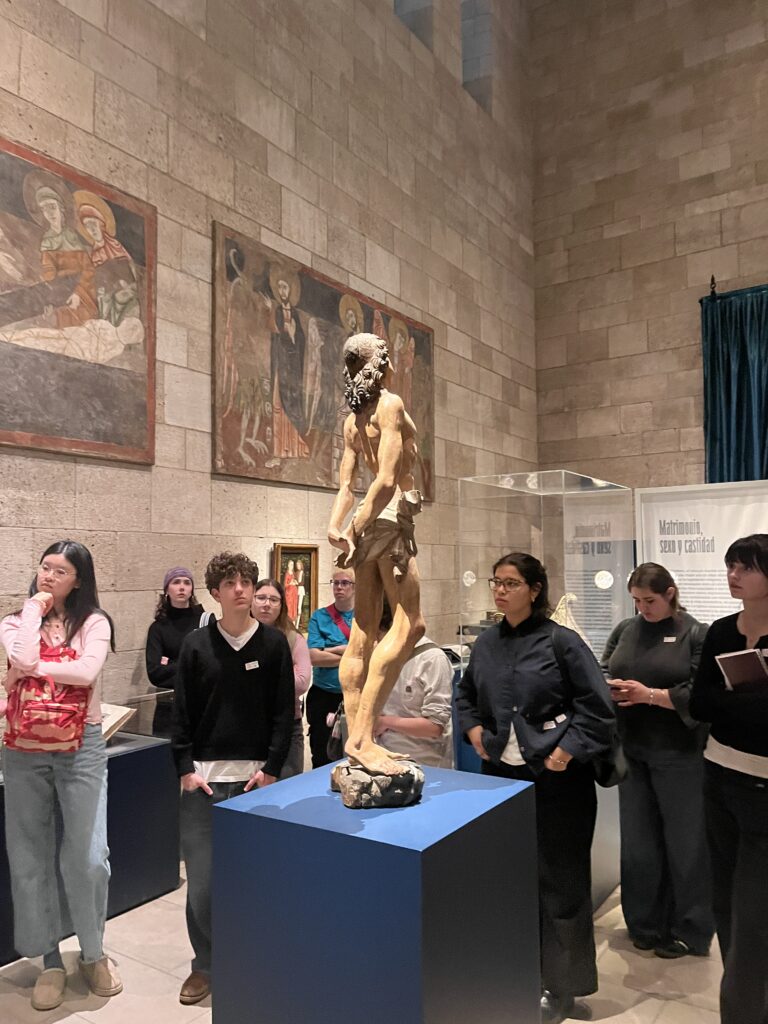
Holcomb explained that she and her co-curator, Nancy Thebaut, arranged the exhibition so as to construct intimate spaces in which art objects could hold small conversations, which explained the diaphanous curtains loosely partitioning the exhibition’s various sections. In the “Beautiful Bodies” section, for example, we admired a late fifteenth-century sculpture of Saint Sebastian, dramatically cast in the room’s carefully crafted lighting–a factor Holcomb described as perhaps the most important element of any exhibition.
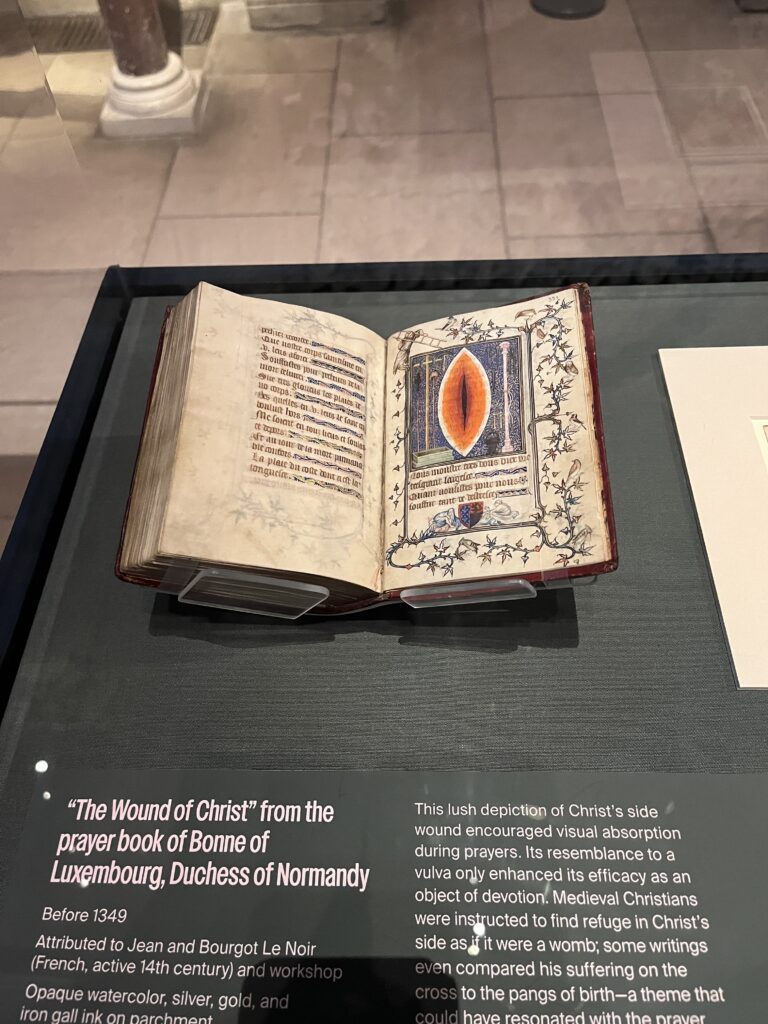
Among other aspects of mounting the exhibition, Holcomb discussed manuscript care, including the labor-intensive process of carefully turning the pages of a medieval manuscript. Normally, individual folios can only be exposed to light for a few months, which typically necessitates their turning partway through a long-term exhibition. This length was extended for one special manuscript page in the exhibition: an image of the side wound of Christ from the Prayer Book of Bonne of Luxembourg, designed as a to-scale representation. The book was much smaller than many of us expected; in fact, many of the items in the exhibition, including several intricately carved ivories, could fit in the palm of a hand. Most of us are used to seeing large-scale paintings prioritized in museum settings; the small-scale objects enabled us to reframe what was considered precious or important in the medieval European world.
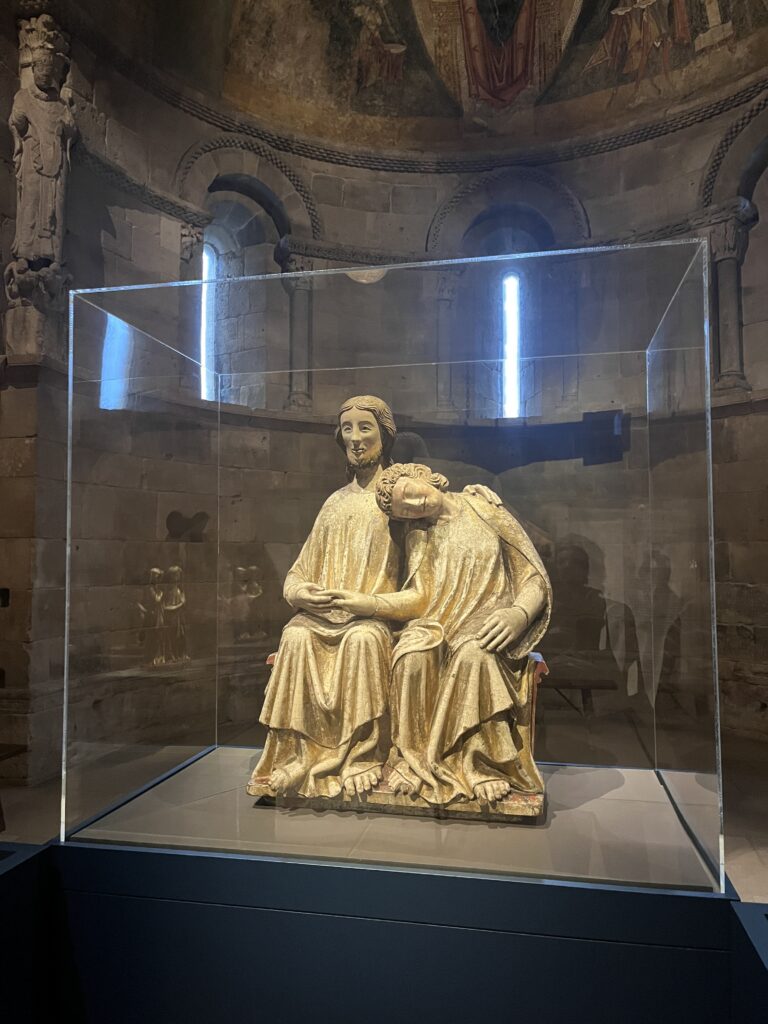
We finished the tour in the back corner of the exhibition–“Mystical Unions”– which housed some of Holcomb’s favorite objects, including a sculpture of the Visitation standing across from a sculpture of Christ and Saint John the Evangelist. The two early fourteenth-century sculptures, in poignant conversation, portray the sort of multifaceted intimacy Spectrum of Desire points to, encompassing friendship, eroticism, courtly love, and union with God.
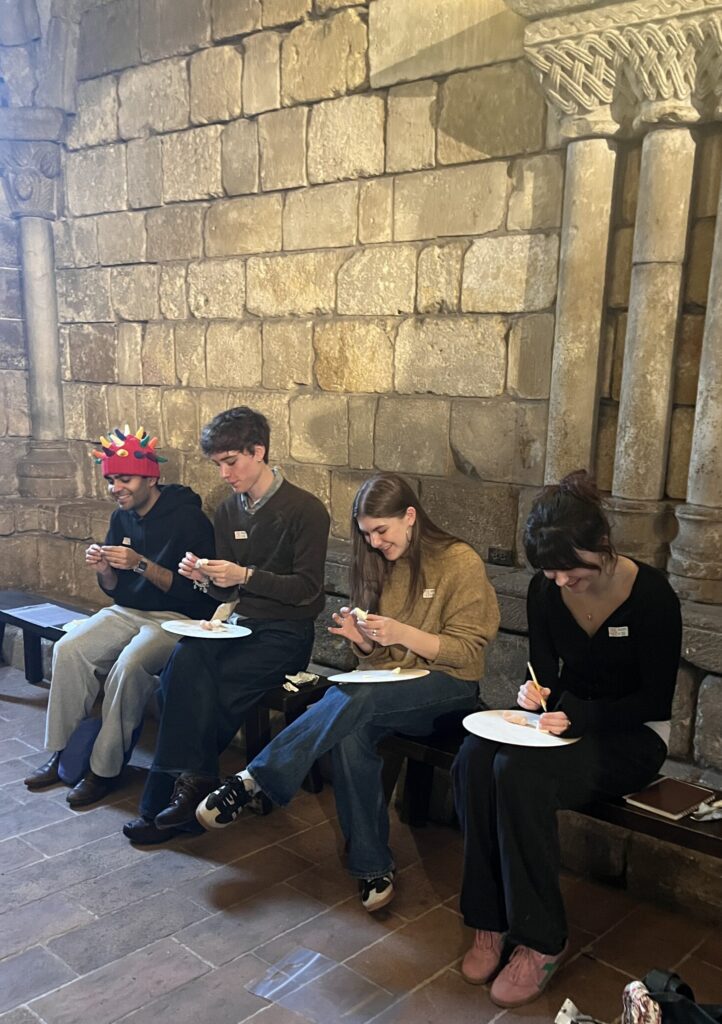
After Holcomb’s tour, Professor Ackley walked us through the rest of the museum, focusing on one or two objects in each room. We especially enjoyed the famous Unicorn Tapestry room and the Cloisters Treasury, a maze of vitrines full of small and ornate objects. The class spent the rest of the day exploring and revisiting our favorite artworks, and we made sure to circle back to Spectrum of Desire so we could each choose an object to write about for a short response paper that focuses on what in-person encounters with objects can teach.
In art history classrooms, we almost always see projected reproductions of the artworks we study, so it was a treat to see these objects in person, overwhelming us with information that screens just can’t provide.
Nell Brayton ’27
(All photos and captions by Joseph Ackley)