
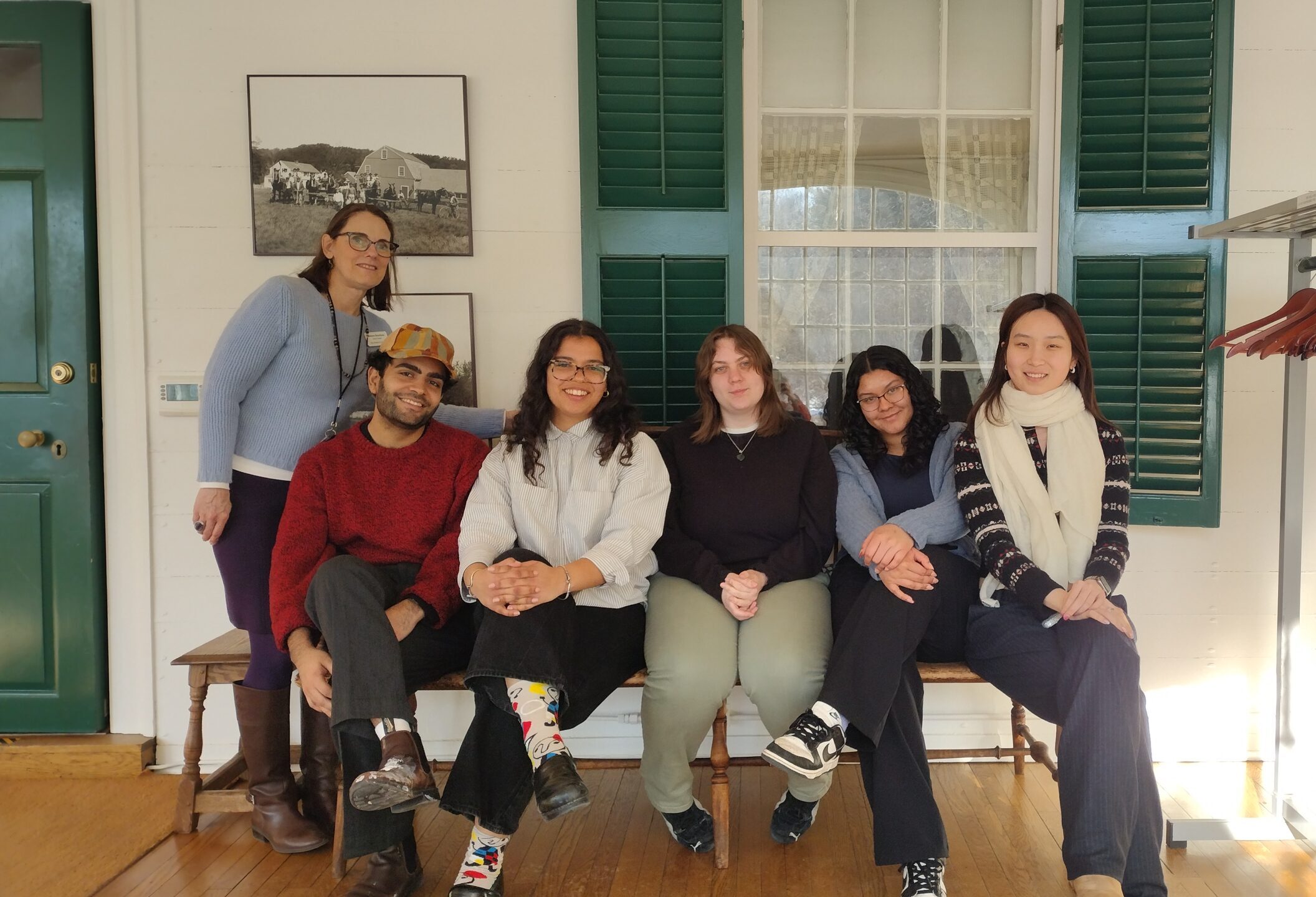
Featured image: Art history minor Rosa Tejada ’26 (second from right) with senior curator Melanie Bourbeau (first from left, standing) and art history majors (left to right) Vansh Kapoor ’26, Annie Hedgepeth ’26, Adrian Peoples ‘26, and Wenqi He ’27 at the Hill-Stead Museum.
There is nothing like an enjoyable field trip to reinforce concepts learned in art history classes and spark conversations among students, and a tour of the Hill-Stead Museum organized by our majors perfectly achieved these two goals.
The weather was springlike and sunny on February 27, when five of our art history majors and minors went to the Hill-Stead Museum to view a special exhibit, The Great Wave: Japonisme at Hill-Stead, and tour the historic Pope Riddle House.
Located in Farmington, Connecticut, a 30-minute drive from Wesleyan, the Hill-Stead was founded by one of America’s first licensed female architects, Theodate Pope Riddle, who transformed the house of her parents Alfred and Ada Pope into a museum in 1946. The Great Wave, on view until Sunday, May 3, displays the Popes’ collection of Impressionist works and juxtaposes them with Japanese woodblock prints (ukiyo-e) that the Popes owned to “clearly illuminate the artistic evolution that Japonisme catalyzed,” wrote the museum.
For art history minor Rosa Tejada ’26, who took Professor Talia Andrei’s ARHA 379: Japanese Art of Pilgrimage in Fall 2025, the special exhibition allowed her to “reconnect with Japanese art in a more tangible, visual way,” she said.
“Seeing the works in person made it easier to recognize stylistic elements and better understand how different artistic forms reflect specific historical periods. It deepened my awareness of how material, technique, and subject matter are tied to cultural and temporal contexts,” Tejada said.
Joining Tejada in the field trip were her classmates from the fall seminar Vansh Kapoor ’26, Adrian Peoples ‘26, and Wenqi He ’27. Annie Hedgepeth ’26, who took Professor Andrei’s ARHA263A: Images of the Floating World in Spring 2025, also participated in the special two-hour tour led by Melanie Bourbeau, the museum’s senior curator.
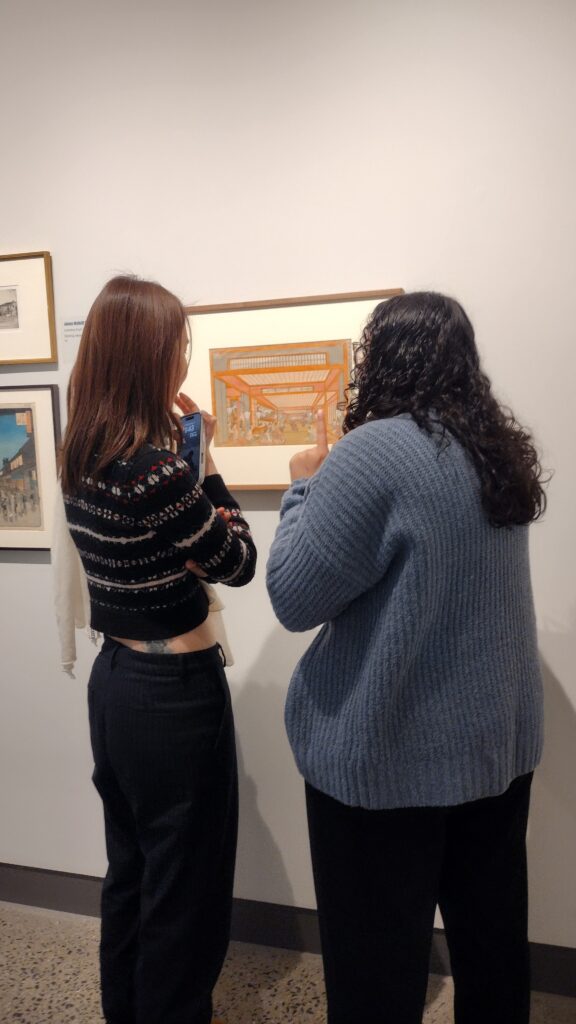
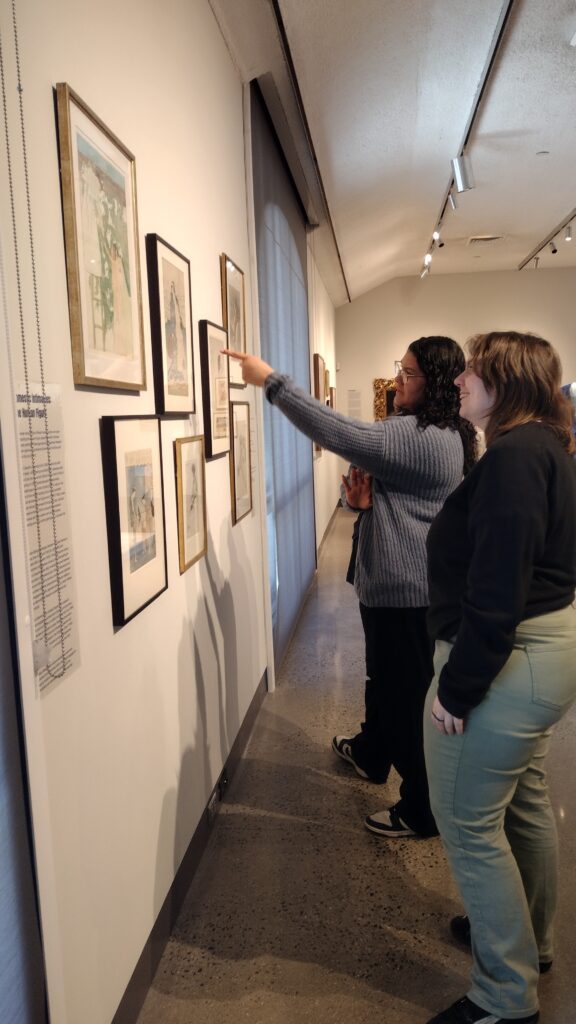
The students held lively conversations while viewing the exhibits. “We discussed the exportation and acquisition of foreign art, particularly in relation to Japonisme and the circulation of Japanese objects in Western markets. We also compared how the value of these works has shifted over time, raising questions about who determines artistic worth and how global exchange influences both interpretation and pricing,” Tejada said.
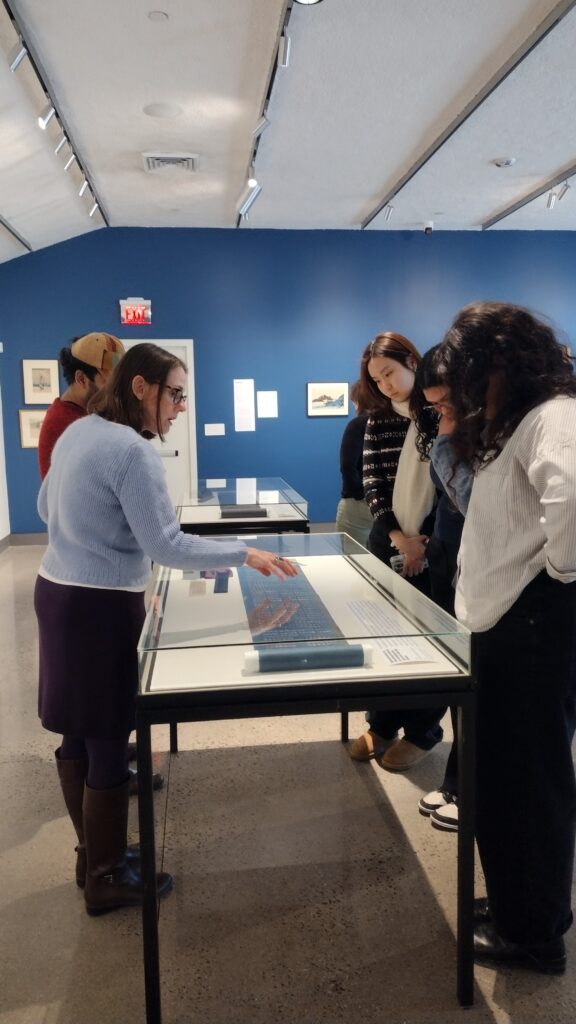
Overall, it was a very engaging field trip. I found it especially interesting that the exhibition was based on a family collection, which added a more personal dimension to the display. It made me think about the role of private collectors in shaping public access to art and how individual tastes can influence broader art historical narratives.
– Rosa Tejada ‘26
The field trip was planned by Hedgepeth and Peoples, senior co-chairs of the Art History Majors Committee. Read about the committee’s field trip to the Glass House in October 2025 here.