

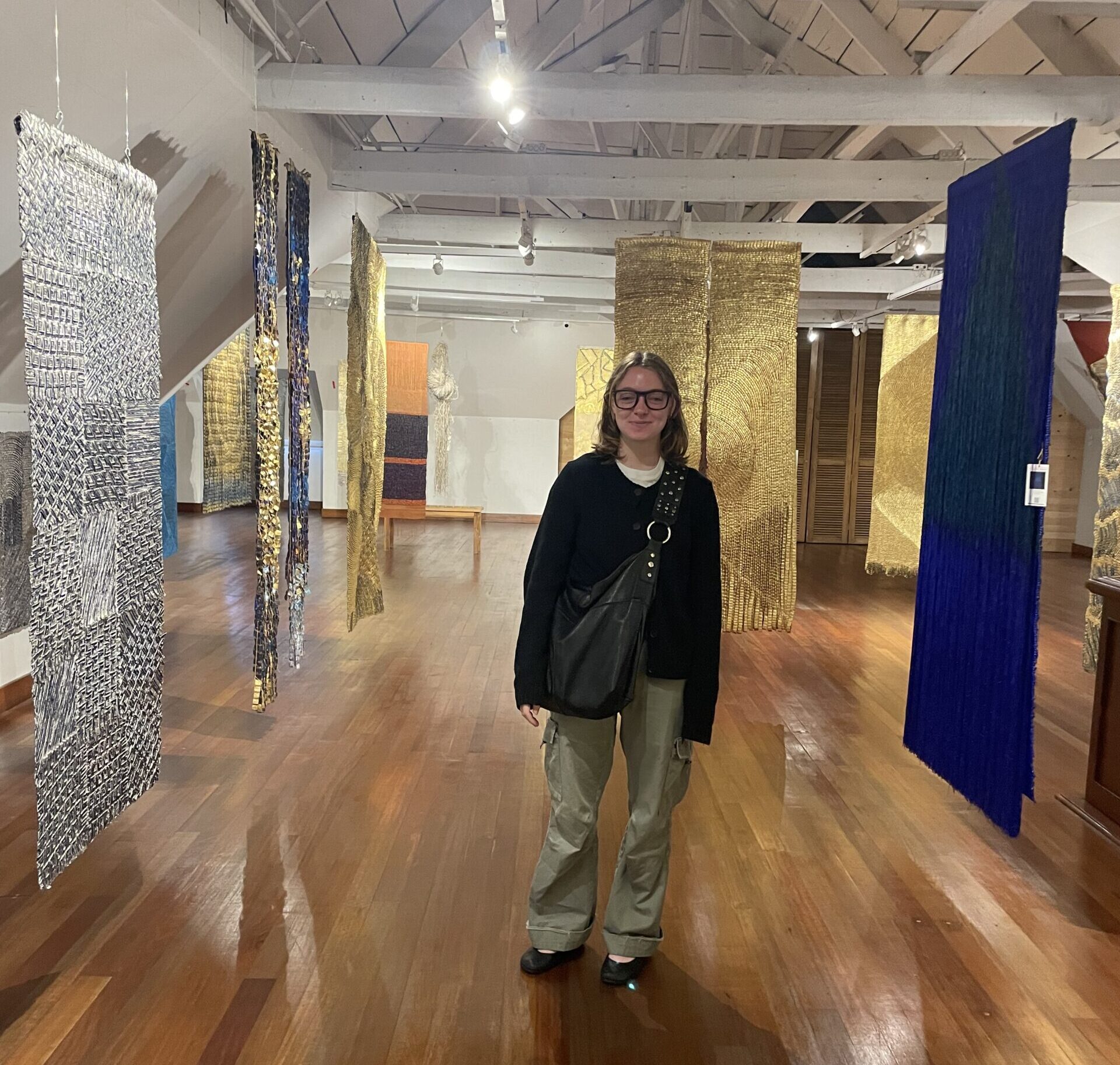
Featured photo above: Lucy Schwalbe with Olga de Amaral’s textile works
(Rewritten from a first-person account by Lucy Schwalbe. All photos provided by Schwalbe.)
With support from the John T. Paoletti Travel Research Fellowship, Lucy Schwalbe ’26 visited Bogotá, Colombia in the summer of 2025 to pursue her senior thesis on Colombian textile artist Olga de Amaral and was able to better understand the cultural context of Amaral’s works.
“Through my travels, I had the immense privilege of meeting Amaral herself, who at age 93 is finally receiving the recognition she deserves,” Schwalbe said.
As a largely understudied artist, there is still much to be uncovered surrounding Amaral’s artistic legacy. Traveling to the city in which she was born, raised, and currently resides offered powerful insights into her diverse cultural influences and the trajectory of her decades-long career.
Lucy Schwalbe
Over the course of eight days, Schwalbe visited four museums in Colombia, with her time at the Museo Nacional being “especially impactful on the development of my research,” she said. “It helped me place Amaral, whose work was featured at the museum, within the context of her Colombian contemporaries and more broadly Colombian art history.”
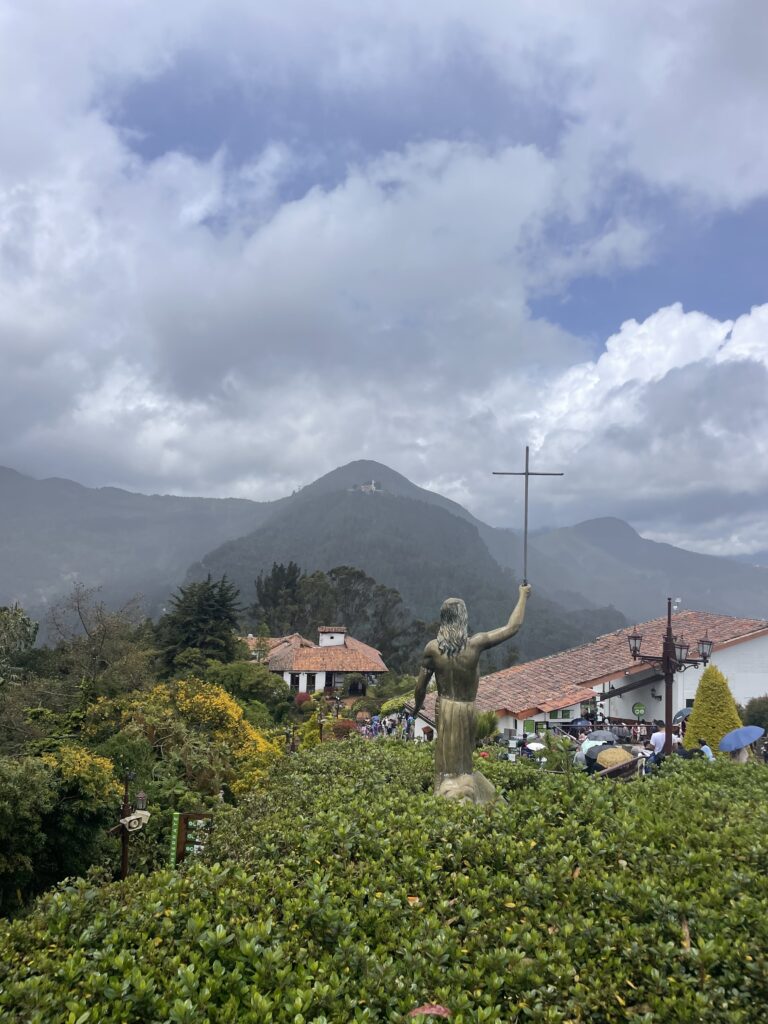
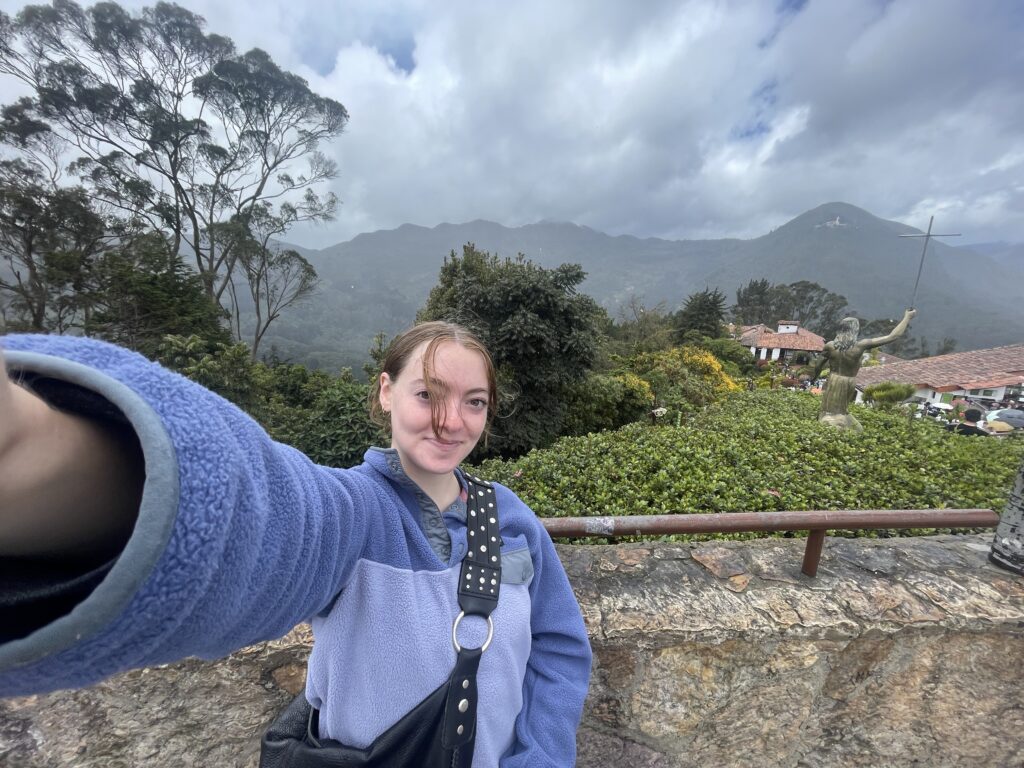
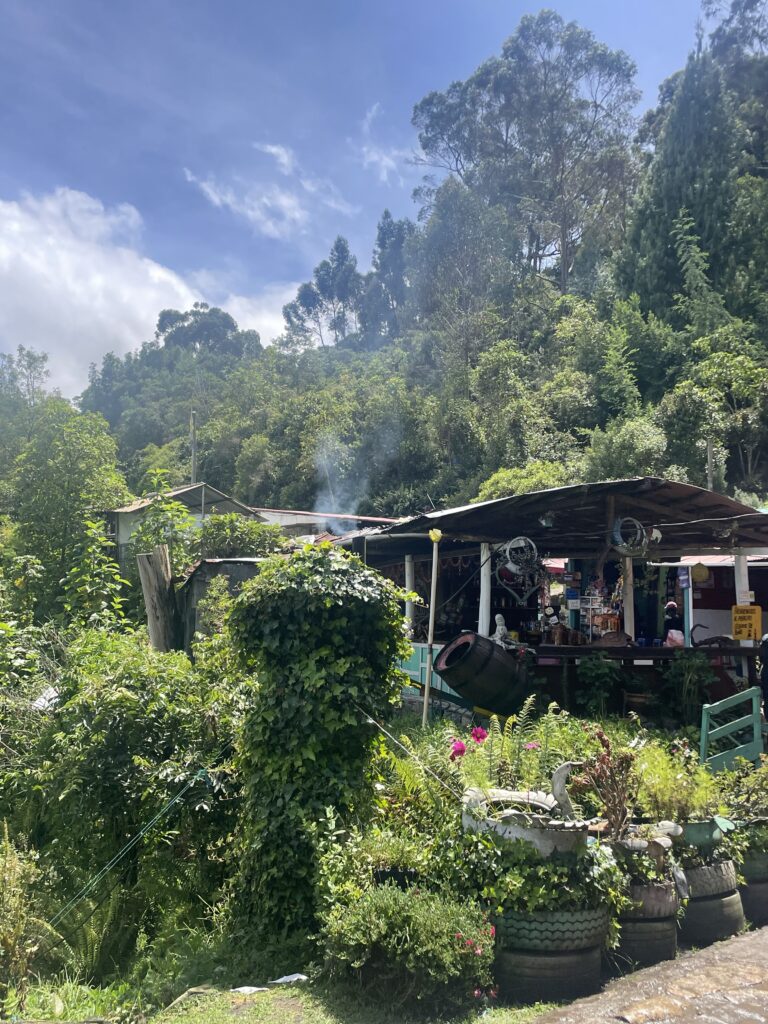
I also got to explore the Andes through a hike up Monserrate, which was a highlight of my trip. This allowed me to experience the natural environment that Amaral spent most of her life surrounded by and frequently references thematically.
Schwalbe spent the last three days of her trip at Amaral’s and her husband Jim’s private gallery and studio, Casa Amaral. The most impactful part of her visit, she said, was meeting Amaral and her husband. “I sat with the couple for over an hour, discussing her process and influences over Colombian pastries and coffee. She asked me about my own interests and what drew me to her work.”
Amaral and her husband were incredibly warm and open to my questions. It felt like the perfect culmination of my coursework at Wesleyan, especially considering that our communication was entirely in Spanish.
Casa Amaral held four vertical looms, raw materials, a current work in progress, and pinned reference photos, “painting a beautifully intimate picture of Amaral’s values and methods,” Schwalbe said. She also received a private tour of the gallery, which featured decades of Amaral’s work.
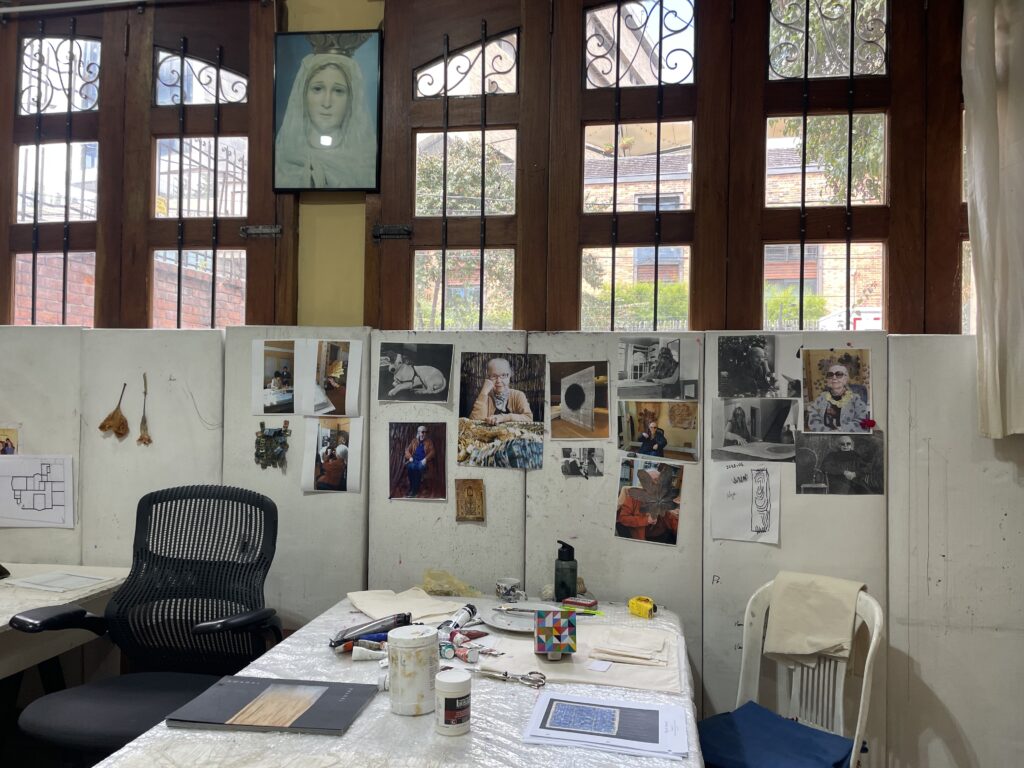
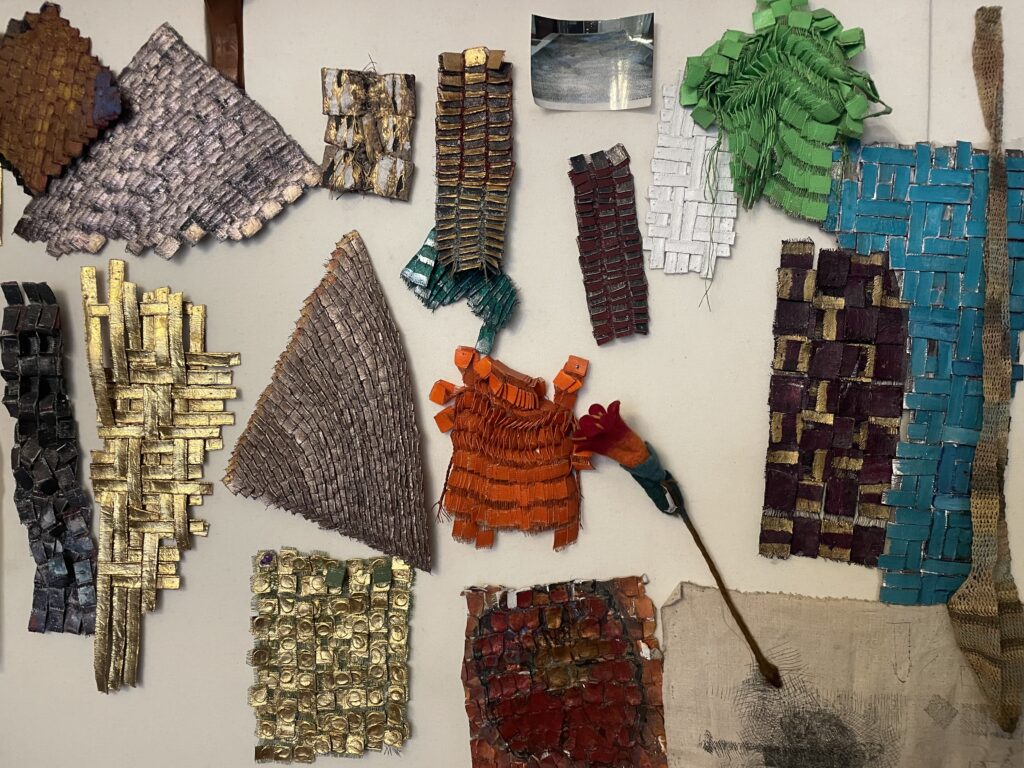
“I was given the time to closely examine each piece on display and take detailed notes on their material and aesthetic qualities. The tour was guided in part by Amaral’s grandchildren, Diego and Valentina, who are deeply invested in preserving their grandmother’s legacy.”
Schwalbe had unlimited access to a library next to the studio, with catalogues from every solo and group exhibition Amaral has ever participated in, along with corresponding invitations to each opening. Amaral’s personal bookshelf is another invaluable resource.
“Many of the books she owns have become integral reading materials in my own studies, including sources on Indigenous Colombian craft, artists she admires, and textile manuals,” Schwalbe said.
I have held my trip to Bogotá and my conversation with Amaral closely throughout my continued research and writing journey. This experience would not have been possible without support from the Paoletti Research Fellowship, for which I am immensely grateful.
The generous grant covered Schwalbe’s transportation, lodging, cultural activities, and meals. Applications for AY2026-27 will receive first consideration if received by March 27, 2026.